They say listening to the radio is a lot like drinking wine: what’s an absolute vintage masterpiece to one person might not quite cut it for the next. Taste is personal.
But when you step into the programmer’s booth in a complex, passionate radio city like Montreal, you can’t just rely on personal taste. You have to trust your gut, look at the competitive landscape to see where the open lanes are, and—most importantly—study history. You have to look back at what actually worked when radio was the undisputed king of the room.
Born on the Border, Raised on the Dial
I was born and raised in Coaticook (yes, that Coaticook—home of the legendary ice cream). Growing up back then, we didn’t have an internet connection or a 500-channel TV universe. There were no streaming algorithms feeding us exactly what they thought we wanted to hear.
But I was lucky.
Because of where Coaticook sits on the map, the night sky was our magic carpet. Once the sun went down, WPTR Albany and KB Buffalo boomed into my bedroom as clearly as if they were broadcasting from across the street. On a good night, WABC and WNBC from New York, stations from Cleveland, Boston, Little Rock, Super CFL and WLS out of Chicago would fade in and out of the static.
The music? It was pretty much the same top-40 hits from coast to coast. But the personalities? They were the difference between endless dial-spinning and staying up under the covers all night.
Falling in Love with the Super 98
In the early seventies, I fell head over heels for a station right here in Montreal. CKGM had become the hit station. They had an unbelievable lineup: Steve Shannon, Donny Burns, Greg Stewart, a bilingual powerhouse named Marc Denis, and the funniest morning DJ I had ever heard in my life—the legendary "Birdman," Ralph Lockwood.
Even when the signal didn’t quite reach me clearly, I hung on every word. I didn't just listen to the "Super 98"; I would actively mimic every phrase, every transition, and every vocal inflection the jocks used. CKGM’s identity—tight rotations, massive promotions, and relentless, personality-driven presentation—was the absolute perfect formula for this city.
Then came 1975, a pivotal year for Quebec radio.
Down in Quebec City, CFOM had been forced off the air. The little English station had simply become too popular for the established French stations in the market, and the CRTC stepped in to resolve the "issue." But as one door closed, another opened.
That fall, CKTS in Sherbrooke launched its own music format.
Ted Silver, Sandy Davis and Isaac Shane arrived at CKTS900 and turned the market completely upside down with huge tunes, clever promotions and a giant presence.
I am proud to say I’m a product of the "Silver School" of Quebec broadcasters. Ted Silver recruited me after I made an absolute pain of myself trying to get his attention. I was green and, frankly, I wasn't very good—but Ted was patient. It was a perfect match.
The Journey of a Radio Junkie
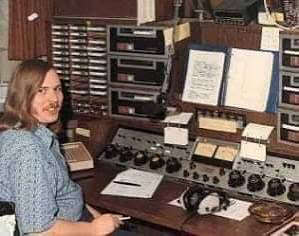
By 1977, I was ready to take the leap. I packed my bags and drove all the way to Wawa, Ontario, for my first full-time gig. Over the next 4 years, I shared a studio with guys who were incredibly talented, like Al Gravelle and Joe Leone.
Around that time, a service called the Aircheck Factory, run by Tom Konard, started distributing monthly cassettes featuring the best DJs and stations from across North America. Listening to 680 CFTR, 1050 CHUM, 13CFRW, 99X, 68RKO, KFRC, KGB, 93KHJ, 64KFI or WAPE in Jacksonville and 'Sunny in the Morning' in Miami made this French kid from the Townships realize just how steep the mountain was going to be.
The names on those tapes were absolute radio gods: Dan Williamson, John Landecker, Big Ron O'Brien, Dr. John Winston, Harry Nelson, J.J. Wright, Sunny Fox, John Mack Flanagan, Charlie Fox and 'the voice' Charlie Van Dyke. Still today, I spend hours on Steve West’s Airchexx archives, just marveling at what those legends could do with a microphone and a pair of turntables.
The Turn of the Century (And the Dial)
Fast forward to radio today. What do we have?
Well, we have lots of music on the French dial, there is a massive reliance on comedians filling the airwaves. But the biggest shift is behind the scenes. The corporate giants took over from the passionate broadcasting families—the Ted Rogers and Geoff Sterlings of the world—and, to be frank, the outcome hasn't been brilliant.
To this day, Toronto's 98.1 CHFI remains an absolute powerhouse because it knows exactly what it is: a polished, warm, consistent Adult Contemporary station that feels like a comfortable companion throughout the day. It has evolved, sure, but it never lost its core identity as the station you keep on in the office, the car, and the kitchen.
Montrealers who grew up with CJFM (FM 96) and the legendary CFQR (92.5) know exactly what we are missing.
The Magic of the Classic Montreal FM Dial
Back in the day, the FM band in Montreal had a distinct, sophisticated, yet incredibly warm texture. If you spin the dial back to the '70s, '80s, and '90s, those two stations represented the gold standard of FM radio:
-
CFQR 92.5: It was the ultimate "Easy Listening/Light AC" giant. It was smooth, elegant, and perfectly programmed for a Sunday morning or a long drive home. When it became Q92, it transitioned into a world-class Adult Contemporary station.
-
CJFM 96: Before it became the high-energy Virgin Radio we know today, "FM 96" was a magnificent Adult Contemporary station. It was personality-driven but incredibly smooth, striking that perfect balance between hit music and warm companionship.
When those stations shifted formats or rebranded, they left a massive demographic completely orphaned.
The Orphaned Listener: Today, if you want English music radio in Montreal, you are largely forced to choose between CHR (Contemporary Hit Radio) targeting youth, or classic rock. There is no true, warm, heritage AC companion like CHFI that respects the listener's intelligence and love for great, melodic music spanning the decades.
The corporate consolidation we talked about has made programmers too afraid of the "middle ground." They think Adult Contemporary is a relic of the past, but CHFI's massive, enduring success in Toronto proves that people still crave a companion on the dial.
Bringing back that level of curation, local warmth, and companionable flow is exactly the kind of "lost art" we need to keep in mind.
You can drive through almost any radio market today and struggle to find a single live, local voice. The rise of music scheduling software has made the announcer secondary to the playlist. Back in '75, we’d spin the big reel-to-reel machines to automate the overnight shift, but during the day? A human being had to be at that console 365 days a year.
Now, voice-tracking lets someone record a "live" show two or three days in advance from a studio hundreds of miles away. No local weather, no community connection, no spontaneous magic. Just generic, safe, middle-of-the-road content.
Defining the Future at CFQR 600
Confucius once said, "Study the past if you would define the future."
Well, believe me: I have studied. I lived it, I breathed it, and I've spent fifty years practicing it.
We aren't going to build the future of radio by pretending the magic of the golden era never happened. We are going to build it by bringing back tight rotations, high-energy presentation, genuine local connection, and—most of all—real, living personality.
I’m honored to have the chance to apply these time-tested principles right here at CFQR 600. Turn us on, turn us up, and let’s make some noise.
daniel@cfqr600.com