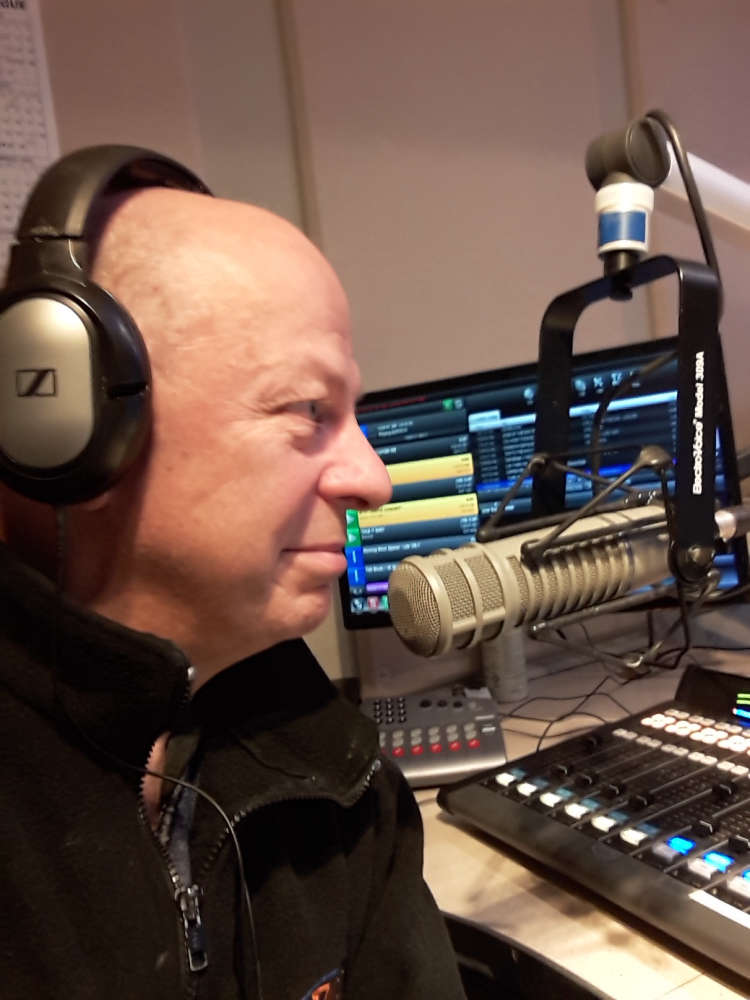
You are probably familiar with the work of Sonny Bono... Well, for years, I was known as Pro Bono.
Let’s call a spade a spade: the radio industry has kicked a lot of ridiculously talented people to the curb in recent years, all in the name of automation, corporate consolidation, and the all-out scramble to make a quick buck no matter what. I survived the purge over the decades largely because I was lucky enough to hold down a good-paying job outside the industry.
In the meantime? I worked for free. A lot.
I know some folks in the business frown at the very thought—the idea that you're "giving away the talent" or undercutting the market. But I was never quite that principled, and I genuinely believed in giving back to the community. I even spent time teaching the rudiments of radio to kids. Now that was pure fun, and it's something nobody can ever take away from me.
Besides, I never thought I was something special anyway. I'm just a guy who is decent at everything and great at nothing—and I simply love this medium far too much to ever walk away from it. That meant years in internet radio and community stations—places where a simple "thank you" or a pat on the back were things you never actually got.
The dream was always to find a real challenge. Enter CFQR 600.
Sitting in the city, CFQR doesn't have a whole lot stacked in its favor right now. There are no corporate suits throwing money around. The owners are good people who are understandably overwhelmed by the sheer mechanics of keeping a business like this afloat—the payroll, the eye-watering electricity bills just to keep the transmitters humming... it all adds up fast. To their credit, they have never surrendered to the "all-music, no-voice" trap. They want real human beings on the air, and that says a lot.
But financial tightropes create massive ripple effects. Not having deep pockets means the station can't afford Numeris subscription fees (what used to be BBM, the Bureau of Broadcast Measurement)—and in commercial radio, that’s a brutal handicap. Without those official ratings numbers, it is infinitely harder to prove your audience to key ad buyers or get anywhere near major agency budgets. And because ad sales are a tough sell without those numbers, attracting top-tier sales talent becomes an uphill battle in itself. It's a classic catch-22.
Looking under the hood at where the rest of the operation stood late last year, the reality was just as stark:
-
The Music & Cancon Chaos: A pool of roughly 950 songs with no clear direction—and no more than 300 Canadian tracks thrown in just to hit CRTC quotas. The problem? A lot of those Cancon selections didn't remotely fit a Classic Top 40 format spanning the '60s through the '90s. Worse, many tracks were obscure re-records or alternate takes instead of the original hit versions listeners actually remember.
-
The Repetition Trap: As any Canadian broadcaster knows, CRTC regulations mandate that English commercial stations run a minimum of 35% Canadian Content between 6:00 a.m. and midnight. When you're forcing that 35% out of a tiny, mismatched pool of 300 tracks, song repetition gets completely out of hand.
-
The Air Staff: Dedicated announcers doing their absolute best, but operating in total silos—each crafting their own isolated vibe.
-
The Brand: No clear definition. Non-existent promotions, dated imaging, and the same sweepers running on a loop.
And then there's the medium itself: AM radio.
AM was the king of the world in my youth. Today? Two-thirds of modern listeners wouldn't even know where to find the band on a dial, let alone why they should tune in.
So why step into the line of fire? Timing is everything.
Being retired gives me a gift and a perspective that a lot of younger radio talent coming up just don't have. My personal objectives at this stage aren't driven by dollars. There is zero chance I could have attempted a project like this a decade ago when I was relying on a full-time paycheck to keep a roof over my family's head and food on the table. Today, I have the luxury of purely focusing on the craft.
Now, I'm not professing to have all the answers here. But I have the energy, and I am resilient. I don't want to reinvent the wheel. My gut tells me that if the core basics of classic Top-40 worked 40 years ago—tight rotations, great presentation, real personality, and local connection—they can be made to work again today.
If I have one true superpower coming into this, it’s my rolodex. Over five decades in and around this business, I’ve accumulated a legendary lineup of friends and contacts—people with massive talent and deep knowledge across every conceivable area of radio. And best of all? They're hungry to jump in and help out.
A little digging into the station's setup got me hooked. Underneath the static, CFQR runs on PlayoutONE—an automation system out of the UK that is absolute magic when used right. It’s the engine behind the curtain playing the tracks, firing the jingles, rolling the spots, and dropping in news and weather right on the mark. When programmed properly, it makes a small station sound completely seamless, polished, and major-league.
The station also aligned with Eric Woodhouse, a Program Director out of Albany who is both a wizard on the mic and a technical master with the software. His contact list is endless, and his tech chops are top-tier.
Make no mistake: everything about this spells a tough, if not impossible, challenge in giant capital letters. I’m knocking on the door, nobody knows who I am, and turning this ship around is going to be a heavy lift.
The question is... can an independent AM station actually make noise in this environment?
The intrigue is untenable.
Stay tuned...